Alpha hydroxy acids (AHAs) are some of the most popular exfoliating ingredients in skincare. They work on the surface of the skin, loosening the bonds between dull, built-up cells so they shed more easily. The result is skin that looks smoother, brighter and more even.
Glycolic Acid
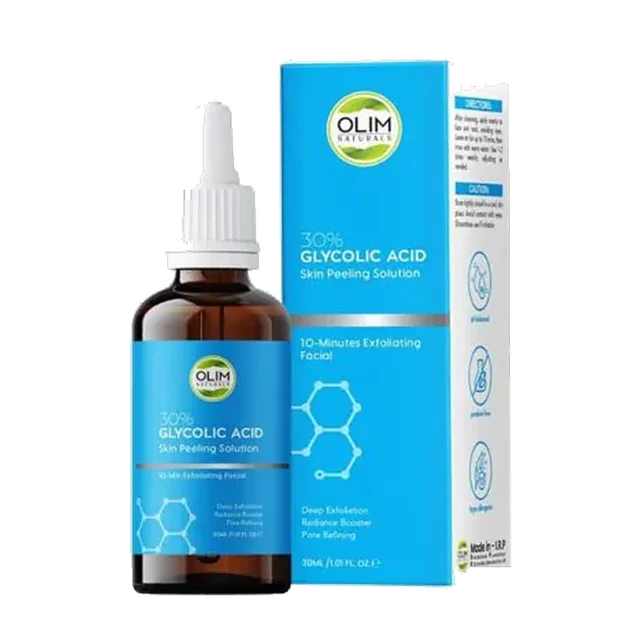
Glycolic acid has the smallest molecule of all AHAs, so it works quickly and effectively. In higher strengths it is used as a short-contact treatment — applied for a few minutes and then rinsed off — like our 30% Glycolic Acid Skin Peeling Solution. It suits normal, oily and combination skin that is comfortable with acids.
Mandelic Acid
Mandelic acid has a larger molecule, which means it works more gradually. That makes it a popular choice for people who are new to acids or who have blemish-prone or uneven-looking skin.
Lactic Acid
Lactic acid gently exfoliates while also helping the skin hold on to moisture, so it is a lovely option for dull or dry-feeling skin. It pairs beautifully with mandelic acid, as in our Mandelic Acid + Lactic Acid Serum.
How to start using AHAs
- Patch test 24 hours before first use.
- Use AHAs in the evening, starting 1–3 times a week.
- Follow with a simple moisturiser.
- Wear a broad-spectrum sunscreen every morning — AHAs can increase sun sensitivity.
- Do not combine different exfoliating acids or retinoids on the same night.
Signs you are overdoing it
Stinging that does not settle, persistent redness, flaking or a tight, “shiny” feeling are signs to take a break. Return to a gentle cleanser and moisturiser until your skin feels comfortable again, then reintroduce acids less often.
This article is for general information and is not medical advice. If you have a skin condition, speak to a dermatologist before using exfoliating acids.